
Your old blog posts are bleeding traffic. While you’ve moved on to new content, those earlier articles sit in search results collecting dust, ignored by both algorithms and readers.
At Emplibot, we’ve seen this pattern repeatedly: posts that once drove consistent traffic gradually fade as industry standards shift and search engines reward fresh content. An AI content rewriting tool can reverse this decline by modernizing your existing posts without starting from scratch.
Why Your Old Posts Keep Losing Traffic
Google’s Freshness Update Changed Everything
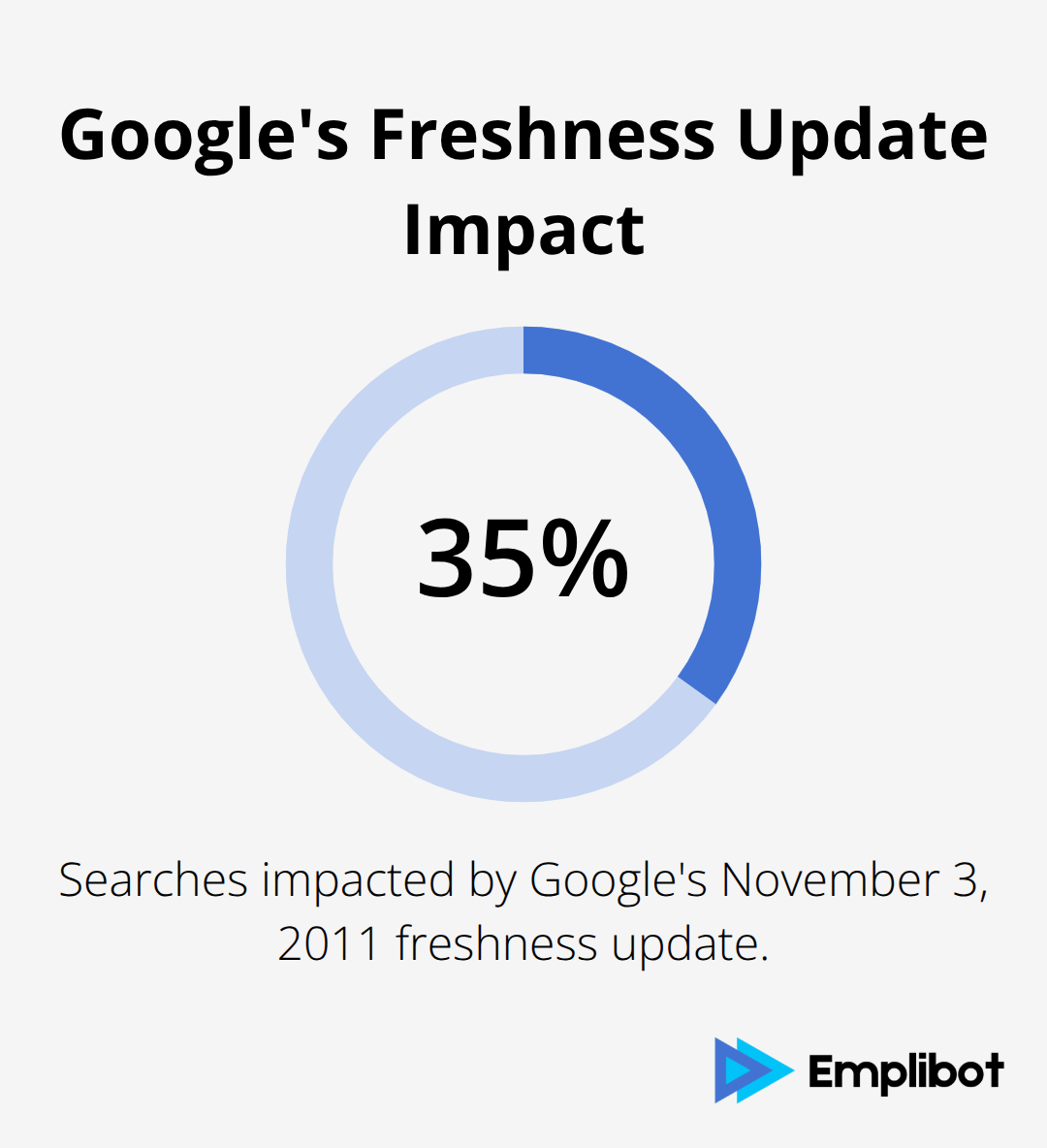
Search algorithms shifted dramatically on November 3, 2011 when Google introduced its freshness update, which affected approximately 35 percent of total searches. That same principle still applies today. Posts written two or three years ago compete against newer articles that incorporate current data, reflect today’s industry practices, and align with how people actually search now.
Google doesn’t penalize old content outright, but it rewards pages that demonstrate ongoing maintenance and updated information. A post about marketing trends from 2023 looks stale next to one published this month with fresh statistics and examples.
Reader Expectations Have Changed
People scanning articles expect current case studies, recent research findings, and examples that match their present reality. An article citing 2022 data on social media engagement or AI adoption simply won’t resonate with someone looking for 2026 insights. Your audience has moved forward, and your content needs to move with them. Outdated examples and references make readers question whether your advice still holds weight in today’s market.
Technical Decay Signals Neglect
Old posts accumulate broken outbound links, outdated screenshots, and references to tools or platforms that no longer exist. These issues signal to both search engines and readers that nobody maintains the content. Industry standards shift faster now than ever. What counted as best practice three years ago may actively hurt your credibility today. A content marketing article recommending outdated tactics doesn’t just fail to rank-it damages your authority when readers notice you’re promoting approaches competitors abandoned.
Why Refreshing Actually Works
The traffic decline isn’t mysterious or inevitable. Posts that once drove consistent organic visitors gradually fade because they’re no longer optimized for current search intent, they lack the freshness signals Google values, and they don’t address the questions people are actually asking now. Updating old blog posts works because Google re-crawls and re-evaluates refreshed pages, giving them a second chance to rank for both existing keywords and new variations you’ve optimized for.
The best candidates for refresh are posts over twelve months old that still receive some traffic but have clearly declined in performance (these have proven audience appeal and need only modernization, not reinvention). Rather than create entirely new content, refreshing existing posts recovers the traffic you’ve already earned and extends the value of work you’ve already invested in. This approach positions you to take advantage of AI content rewriting tools that can modernize your posts at scale.
How AI Rewriting Tools Modernize Outdated Posts
AI content rewriting tools work best when they handle three specific tasks simultaneously: updating language and examples to reflect current industry standards, improving on-page SEO elements without stripping away your original message, and integrating fresh data that rebuilds reader trust. Most people treat these as separate steps, but tools like GPTHuman, Koala AI, and Hypertxt.ai excel because they tackle all three at once. GPTHuman’s multi-tone voice adaptation maintains your brand voice while modernizing phrasing. Koala AI integrates live data access directly into the rewriting process, so you pull current statistics mid-draft instead of just changing old numbers.
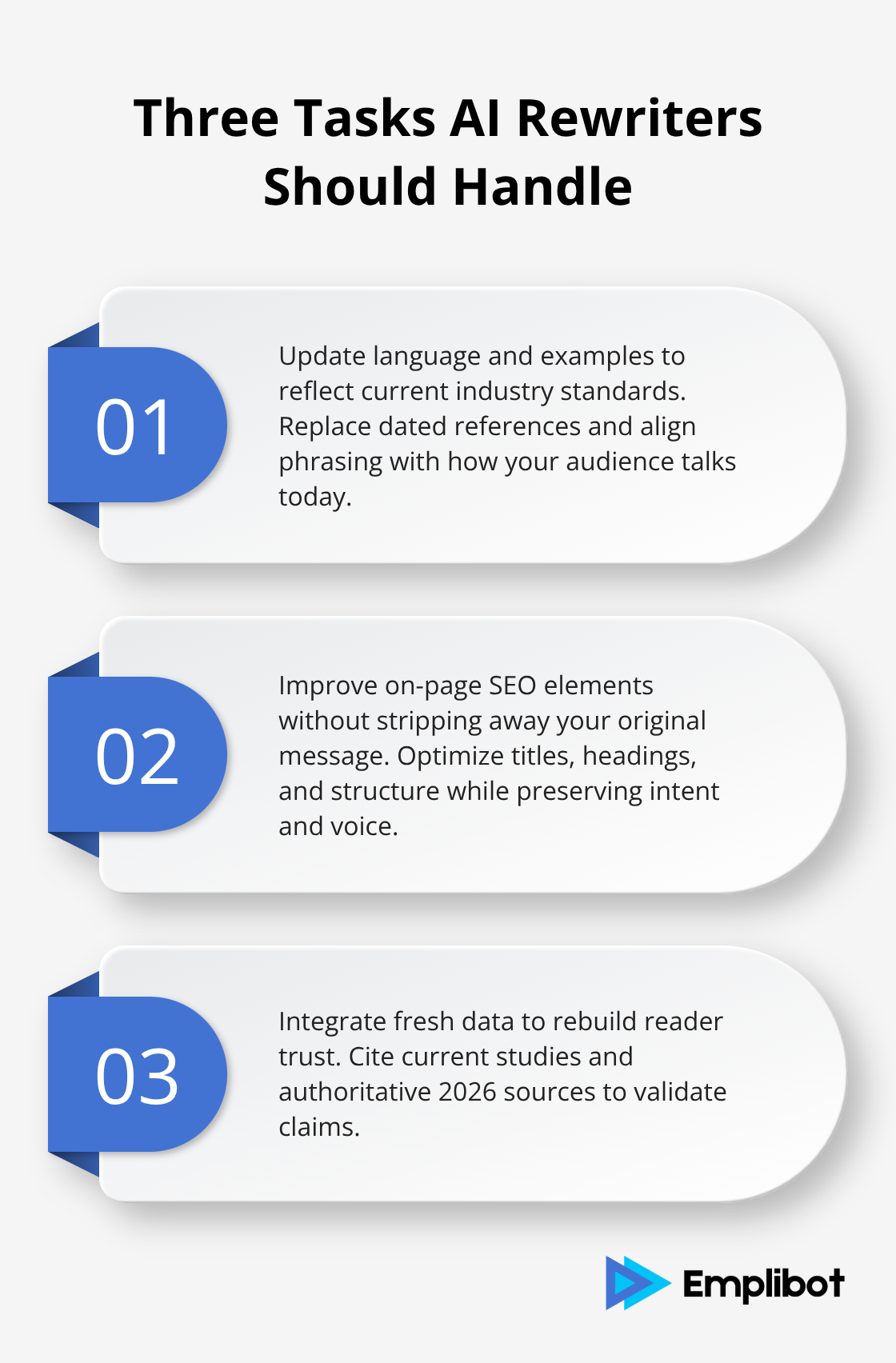
Hypertxt.ai combines research, keyword optimization, and citation management in one workflow, meaning your refreshed post ranks for new keyword variations while citing authoritative 2026 sources instead of outdated references.
What Actually Changes During a Rewrite
A 2023 post about content marketing strategy probably references influencer marketing trends from that year, recommends tools that have since evolved or shut down, and cites engagement statistics that no longer reflect reality. When you refresh it, you replace those 2023 examples with 2026 case studies, update tool recommendations to current platforms, and pull fresh statistics from sources like Statista or industry reports published this year. The title and meta description also shift-not randomly, but strategically. If your original post ranked for broad terms like content strategy, your refreshed version targets longer, more specific intent phrases your audience actually searches for now. Tools like SurferSEO’s audit function surface these gaps automatically, showing you which related keywords your competitors rank for that you’ve missed. Updating internal links matters equally; a refreshed post should link to your newer content, not just to itself, which improves crawlability and keeps readers exploring your site longer.
Why Human Review Remains Essential
AI rewriting tools produce publishable drafts faster than any human could, but they occasionally miss industry-specific context or fail to catch subtle outdated references that survived the rewrite. Spend thirty minutes maximum reviewing the AI output-checking factual accuracy, verifying that cited statistics come from reputable sources, and confirming that examples still apply to your target audience. Jasper’s Content Improver template handles tone and readability adjustments efficiently, but you still need to verify that a refreshed healthcare post doesn’t accidentally recommend a treatment protocol that shifted since 2023. Google’s guidelines on AI content emphasize that non-commodity content wins; your human review transforms a generic AI draft into content that actually reflects your expertise and current market position.
The Tools That Make Refreshing Faster
SurferSEO’s audit tool discovers missing terms and analyzes ranking factors, identifying opportunities to add internal links and beat competitors. Koala AI’s built-in SEO features and live data access eliminate the need to manually hunt for current statistics. WriteHuman’s humanizer function ensures refreshed content reads naturally while maintaining your original intent. These tools don’t replace your judgment-they accelerate the mechanical parts of rewriting so you focus on what matters: ensuring accuracy and strategic alignment with your current business goals.
The real power emerges when you combine these tools into a single workflow. You identify underperforming posts, run them through an AI rewriter with live data integration, audit the output for accuracy and keyword opportunities, and republish with updated internal links. This process takes hours instead of days, which means you can refresh your entire content library strategically rather than letting old posts continue to fade.
How to Find and Fix Your Worst-Performing Posts
Start with Google Search Console and filter for pages with high impressions but low click-through rates. These posts attract visibility from search engines yet fail to convert that visibility into clicks, which means they lose traffic because they’re outdated or poorly optimized for current search intent. Look specifically for posts published over twelve months ago that still receive at least fifty to one hundred monthly impressions; these have proven audience demand and simply need modernization rather than complete reinvention. Pull a spreadsheet with the top twenty candidates, noting their current rankings, traffic, and target keywords. This focused approach beats trying to refresh your entire content library at once, which spreads effort too thin and delays results. Next, cross-reference this list against your analytics to identify which posts once drove higher traffic. A post that brought two hundred monthly visitors two years ago but now delivers thirty is an excellent refresh candidate because the decline signals fixable problems like outdated examples or stale statistics rather than fundamental lack of interest.
Preserve Your Original Voice During Rewrites
Open your highest-priority post in a document alongside an AI rewriting tool like Koala AI or Hypertxt.ai. Rather than feed the entire post to the tool at once, break it into sections and rewrite one or two paragraphs at a time, then verify that each output maintains your original tone and perspective. This prevents the AI from flattening your unique voice into generic language that reads like every other refreshed post on the internet. Set a strict thirty-minute editing window for each post; anything longer means you’re rewriting instead of refreshing, which defeats the purpose of using AI to accelerate the process. Check that all statistics come from sources dated 2025 or 2026, and swap out any outdated tool recommendations with current alternatives your audience actually uses now. If your original post mentioned a platform that shut down or evolved significantly, replace it with a specific modern equivalent and briefly explain why the switch matters. For example, if your 2023 post recommended Buffer for social scheduling, verify whether that recommendation still holds or whether your audience has shifted to other tools. The goal is modernization, not complete reconstruction; preserve the core argument and structure while updating every fact, figure, and example to reflect today’s market.
Update Keywords and Strengthen Link Architecture
After refreshing the body content, run your updated post through SurferSEO’s audit tool to discover related keywords you missed in the original version. Look for keyword variations with decent search volume that your competitors rank for but you don’t; these represent untapped opportunities hiding within your refreshed post. Update your meta title and description to reflect the refreshed content and target these new keyword variations, which typically increases click-through rate even if your ranking position stays identical.
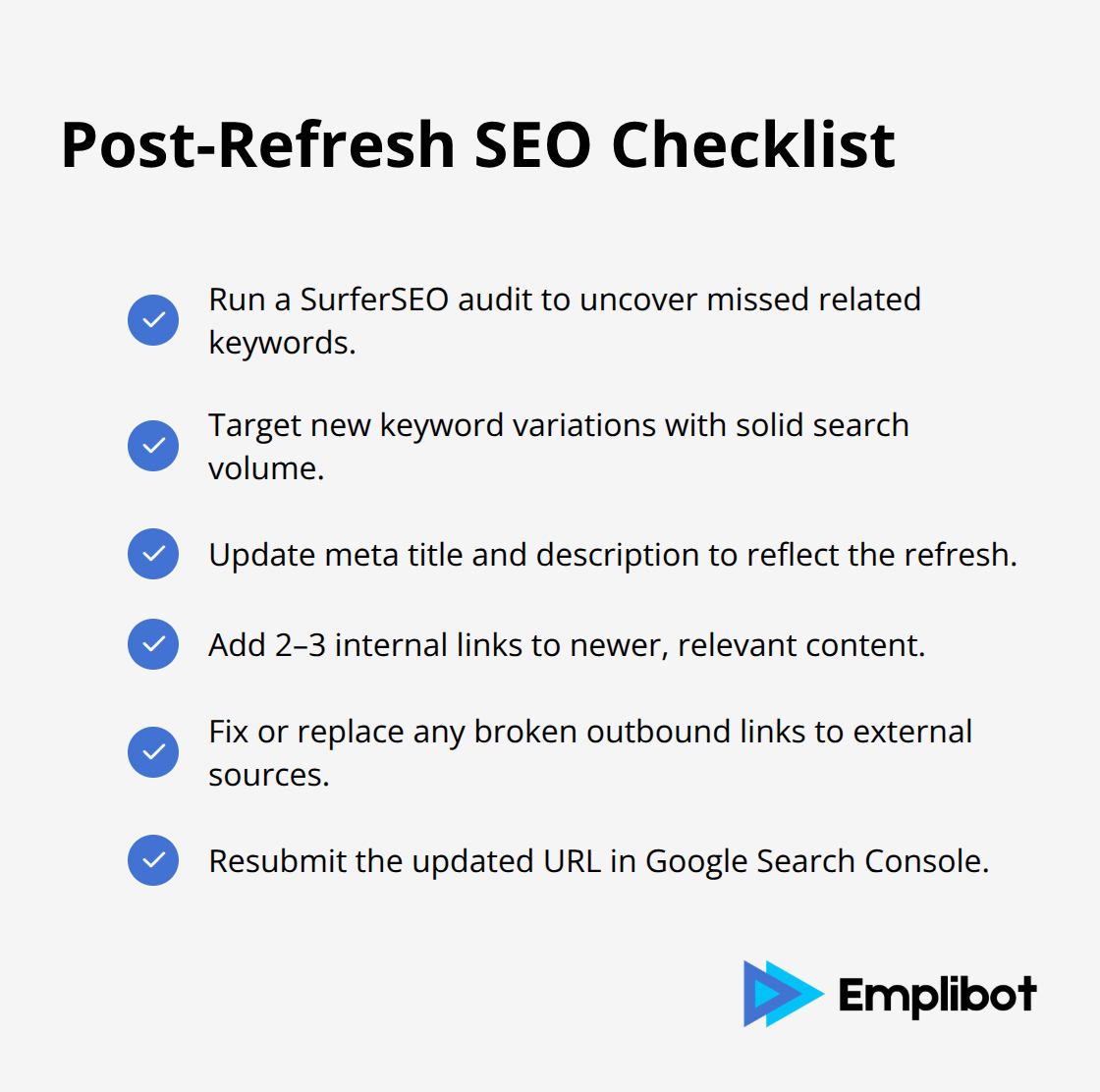
Add two to three internal links to your newer content; old posts should link forward to current articles, not just to themselves, which improves how search engines understand your site structure and keeps readers exploring deeper. Fix any broken outbound links by checking that external sources still exist and updating URLs where sources have moved. A refreshed post with dead links to external sites signals neglect to both algorithms and readers, which undermines the credibility boost you gained from updating statistics and examples. Finally, resubmit the updated URL through Google Search Console to signal to Google that meaningful changes have occurred and the page deserves re-evaluation for ranking.
Final Thoughts
Refreshing old posts recovers traffic you’ve already earned instead of abandoning them for new content. Posts that once drove consistent visitors fade because search engines reward fresh content and readers expect current information, but an AI content rewriting tool accelerates recovery by modernizing language, updating statistics, and improving SEO elements simultaneously. This transforms a two-day project into a two-hour workflow, making it practical to refresh your entire content library strategically.
Google re-crawls updated pages and gives them a second chance to rank, which means your best candidates-posts over twelve months old that still receive traffic but have clearly declined-represent genuine opportunities for recovery. You modernize examples, pull fresh 2026 data, update internal links, and verify accuracy before publishing, with tools like Koala AI and SurferSEO handling the mechanical work while your thirty-minute human review ensures factual accuracy and strategic alignment with your current market position. Each refreshed post compounds over time, stabilizing organic traffic while your newer content continues attracting fresh visitors.
Treat content refreshing as an ongoing practice rather than a one-time project by auditing your top performers quarterly and refreshing underperformers in batches. Emplibot automates this entire workflow, handling keyword research, content optimization, and distribution across your WordPress blog and social platforms so your content library transforms from a static asset into a living system that continuously recovers traffic and extends the value of every post you’ve published.