
Most WordPress site owners spend hours each week managing content calendars, writing posts, and hitting publish. At Emplibot, we’ve seen firsthand how autoblogging with WordPress transforms this workflow into something manageable.
The right automation tools handle content creation, publishing, and distribution so you can focus on strategy instead of repetitive tasks. This guide walks you through how it works and what you need to know to get started.
How WordPress Autoblogging Actually Works
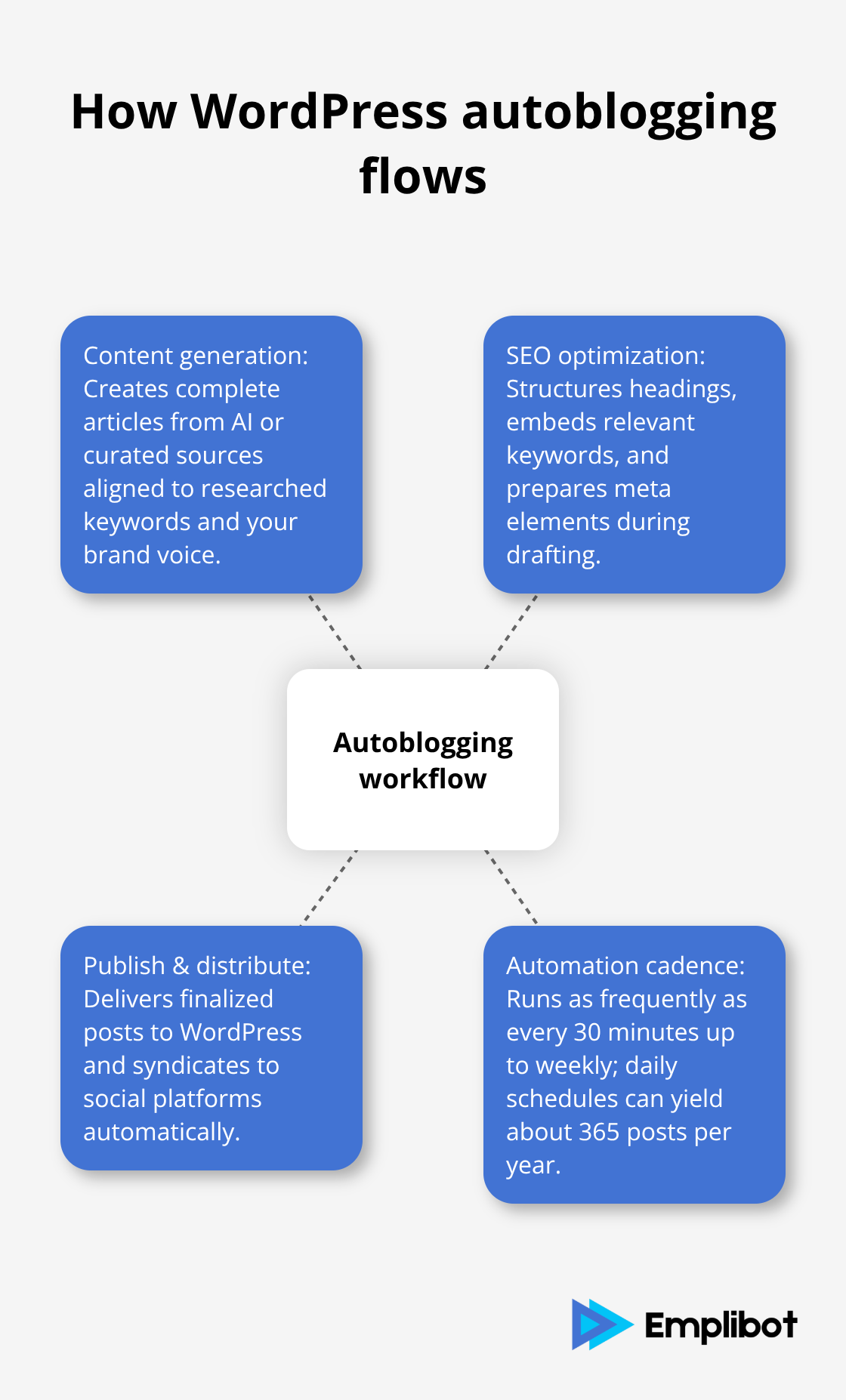
When you set up autoblogging in WordPress, the system handles three distinct phases that happen either simultaneously or in sequence depending on your configuration. The tool involves content generation using AI or pulls from existing sources, then it optimizes that content for search engines by analyzing keywords and structuring headings appropriately, and finally it publishes to your WordPress site and distributes across social platforms. Autoblogging solutions publish new content between every 30 minutes to weekly intervals, which means a site running daily automation could produce 365 posts annually without manual intervention.
Content Generation Happens Automatically
The content creation phase starts with keyword research that identifies what your audience actually searches for. The system performs this research automatically, then generates complete articles rather than just outlines or fragments. The generated content gets customized to match your brand voice, tone, and writing style through adjustable parameters. You set these preferences once and the system applies them consistently across all future posts.
WordPress then receives the finished article with proper formatting, headings structured for readability, and SEO elements already embedded. The critical difference between quality autoblogging and low-quality automation is that the content arrives publication-ready, not requiring extensive editing before going live. You maintain control over whether posts publish immediately or save as drafts for review.
SEO Gets Built In, Not Added Later
Search engine optimization happens during content creation, not as an afterthought. The autoblogging system analyzes search intent, incorporates relevant keywords naturally throughout the article, and structures headings to improve readability for both users and search algorithms. Internal linking suggestions connect new posts to existing content on your site, which search engines reward.
Meta descriptions and title tags get generated alongside the article itself. WordPress compatibility with page builders like Elementor and Beaver Builder means your automated posts maintain consistent formatting and visual presentation across your site. This integrated approach prevents the common mistake of publishing content that looks unprofessional or fails to rank because it lacks proper optimization.
Distribution Multiplies Your Reach Immediately
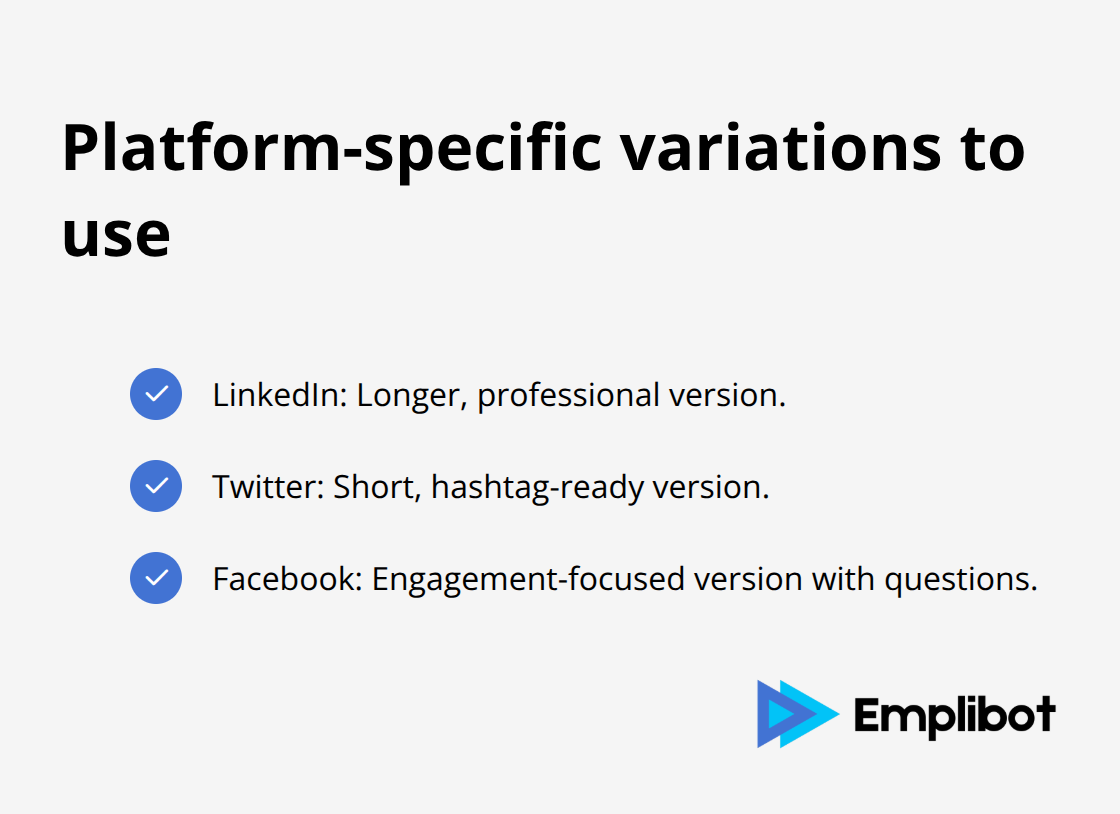
Once WordPress publishes your post, autoblogging extends far beyond your website. The system simultaneously distributes content to LinkedIn, Facebook, and Twitter with platform-specific formatting. Each social post adapts to that platform’s requirements-LinkedIn receives longer-form content with professional tone, Twitter gets concise versions with relevant hashtags, and Facebook receives more conversational versions with engagement hooks.
This multi-platform distribution means one piece of WordPress content generates traffic from multiple channels without requiring you to manually reformat and post on each platform separately. The result is consistent presence across channels where your audience actually spends time. Sites implementing this approach see traffic increases because they reach people wherever they already gather online. Understanding these mechanics sets the stage for recognizing the tangible business benefits that autoblogging delivers.
What Autoblogging Actually Saves Your Business
Time Your Team No Longer Wastes
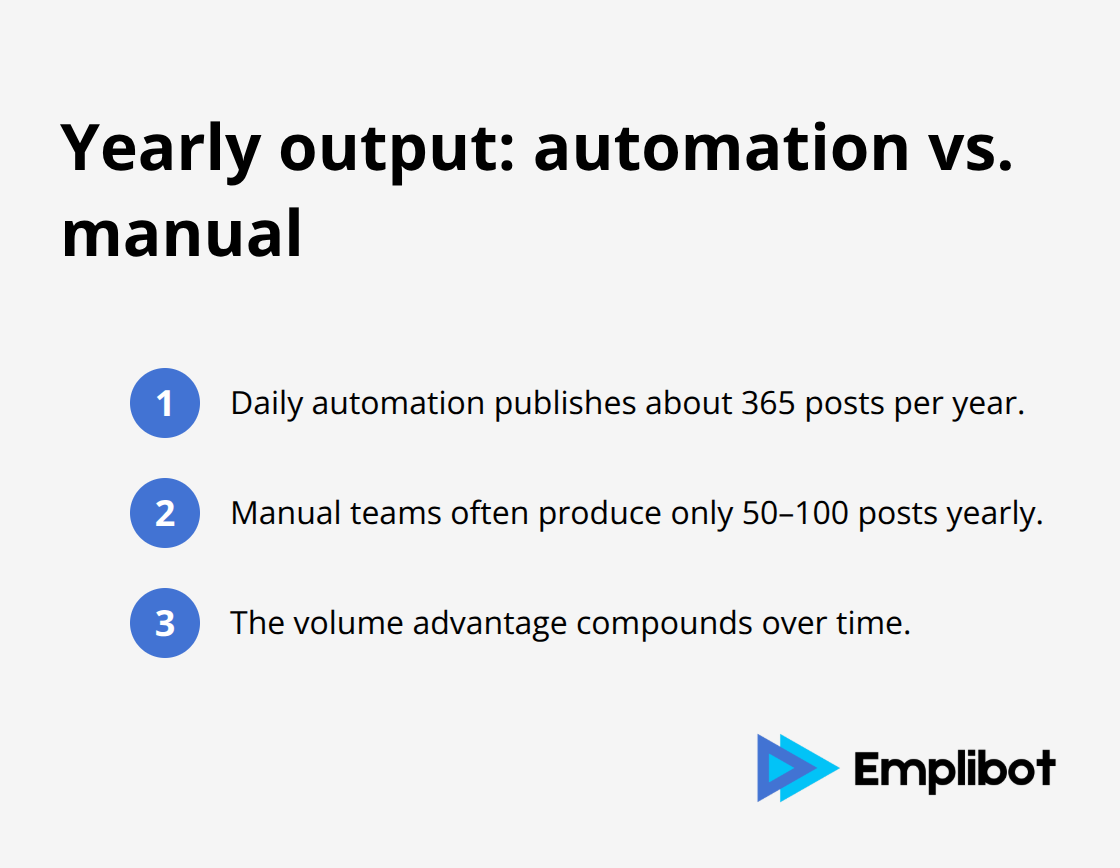
Content teams lose significant time weekly to tasks that autoblogging eliminates. Your team stops writing outlines, stops formatting posts for multiple platforms, stops scheduling social updates manually, and stops waiting for content to go live. With automation running on a daily or weekly cycle, your WordPress site publishes fresh content whether you work or sleep. This consistency matters because search engines favor sites that publish regularly. A site publishing one post daily generates roughly 365 posts annually without requiring a single additional hour from your team. That’s not theoretical-it’s the direct output of running automation continuously. Your competitors publishing manually might manage 50-100 posts yearly, which means autoblogging gives you a structural advantage in content volume that compounds over time.
Traffic That Multiplies Across Channels
The traffic multiplication happens because automation reaches people across multiple channels simultaneously. One WordPress post distributed to LinkedIn, Facebook, and Twitter means three separate opportunities for your content to drive clicks back to your site. LinkedIn users see professional content in their feed, Twitter users encounter concise versions with hashtags, and Facebook users get engagement-focused posts-all from the same source material. This multi-channel presence directly increases website visitors. Sites implementing consistent multi-platform distribution report higher monthly traffic because they capture audiences across channels instead of concentrating all effort on a single platform.
Lead Generation That Scales With Volume
Lead generation improves because more traffic inevitably produces more qualified prospects. If your WordPress blog currently generates 100 monthly leads from 1,000 visitors, doubling your visitor count through consistent publishing and distribution puts you at 200 leads without changing conversion rates. Autoblogging handles the volume side of that equation, freeing your team to optimize conversion rates instead of scrambling to produce enough content. This shift from content production to conversion optimization represents the real competitive advantage-your team focuses on strategy while automation handles the repetitive work that previously consumed their calendar.
Common Challenges and How to Overcome Them
Quality Separates Success From Failure
Autoblogging systems produce volume, but volume without quality destroys your site’s credibility and search rankings. The difference between successful automation and failure comes down to how strictly you control what gets published. When you set up automation, you’re not removing human judgment from the process-you’re relocating it to the configuration stage. Quality settings matter intensely. Systems that produce content based on shallow keyword matching create thin, forgettable articles that bounce readers immediately. Instead, configure your automation to prioritize topic depth, require minimum word counts around 1,500–2,000 words per article, and enforce fact-checking against authoritative sources in your niche. WordPress plugins like Yoast SEO integrate directly with autoblogging tools and flag content that lacks semantic relevance or keyword optimization before publication. The automation should produce articles that would be acceptable if a human writer had created them, not content that technically exists but adds no real value. Sites that treat autoblogging as a shortcut to mediocrity see traffic declines within months as search engines deprioritize thin content. Sites that treat it as a scaling mechanism for quality content see sustained growth because automation multiplies their good work, not their mistakes.
Duplicate Content Threatens Your Rankings
Duplicate content represents a major threat that automation introduces if left unchecked. When multiple WordPress sites pull from the same RSS feeds or use identical content sources, search engines see multiple versions of the same article and must choose which version to rank-typically punishing all versions in the process. Canonicalization solves part of this problem, but the real solution is configurable content sourcing. Your automation should pull from sources specific to your niche and angle, then add substantial original commentary, analysis, or data interpretation that makes each piece genuinely unique. If you own multiple WordPress sites, each site needs distinct content angles and audience-specific customization, not identical posts published simultaneously. Test your setup by searching Google for exact phrases from your automated articles within 48 hours of publication. If multiple versions appear, your automation is creating duplicates. Adjust your source selection or add originality requirements immediately.
Platform-Specific Content Multiplies Your Reach
Managing multiple publishing channels simultaneously demands that you treat each platform differently rather than broadcasting identical content everywhere. LinkedIn audiences expect professional insights with business context, Twitter users need concise takeaways with conversation starters, and Facebook audiences respond to community-focused angles with calls to engagement. Automation that simply republishes the same text across all three platforms wastes distribution potential. Configure your system to produce platform-specific variations automatically-longer professional versions for LinkedIn, shortened versions with relevant hashtags for Twitter, and engagement-focused versions with questions for Facebook. This approach multiplies your reach effectiveness because each audience receives content formatted for how they actually consume information on that platform.
Final Thoughts
Autoblogging with WordPress transforms how businesses approach content marketing by eliminating the bottleneck that limits growth. The sites winning right now publish consistently across multiple channels while competitors scramble to produce a handful of posts monthly. Your team stops wasting hours on content production and redirects that energy toward strategy, conversion optimization, and audience engagement instead.
Emplibot handles the entire automation workflow, managing keyword research, content creation, SEO optimization, and distribution across platforms simultaneously. The platform produces high-quality content tailored to your business and publishes directly to WordPress while syndicating to social channels automatically. This consistent publishing compounds over time, building authority and traffic without requiring additional headcount.
Start small with daily or weekly automation, monitor your results for two weeks, then adjust your settings based on what performs best. Growth compounds when you maintain consistency, and automation makes consistency effortless. Your competitive advantage emerges not from having the biggest team, but from publishing more strategically than your competitors.