

Most companies publishing content manually hit a wall fast. Your team spends weeks researching and writing, yet your publishing schedule stays inconsistent and your SEO rankings stagnate.
SEO-focused content automation changes this. At Emplibot, we’ve seen businesses transform their content strategy by automating keyword research, on-page optimization, and publishing workflows. The result is consistent, optimized content flowing out regularly without the manual grind.
Why Manual Content Creation Holds You Back
Research and writing consume enormous amounts of time before a single post goes live. Your team spends days hunting for keywords, reading competitor articles, structuring outlines, and drafting content. According to MarketMuse, content optimization takes 8 hours per post. Add keyword research, fact-checking, and revisions, and you’re looking at significant work before publication. Meanwhile, your competitors who publish weekly or bi-weekly accumulate backlinks, capture search traffic, and build topical authority. You’re stuck in a cycle where publishing frequency drops because the process moves too slowly. Sites that publish regularly outrank sites that publish sporadically, even when individual posts are high-quality. Your manual workflow guarantees you’ll lose ground to faster publishers.
The Time Trap Slows Everything Down
Your team wastes weeks on tasks that automation handles in minutes. Keyword research alone eats up days as writers hunt through search results, analyze competitor content, and validate search volume. Then comes the outline phase, where someone structures the piece, checks for gaps, and reorganizes sections. The actual writing takes another 5-8 hours, followed by editing, fact-checking, and SEO optimization.
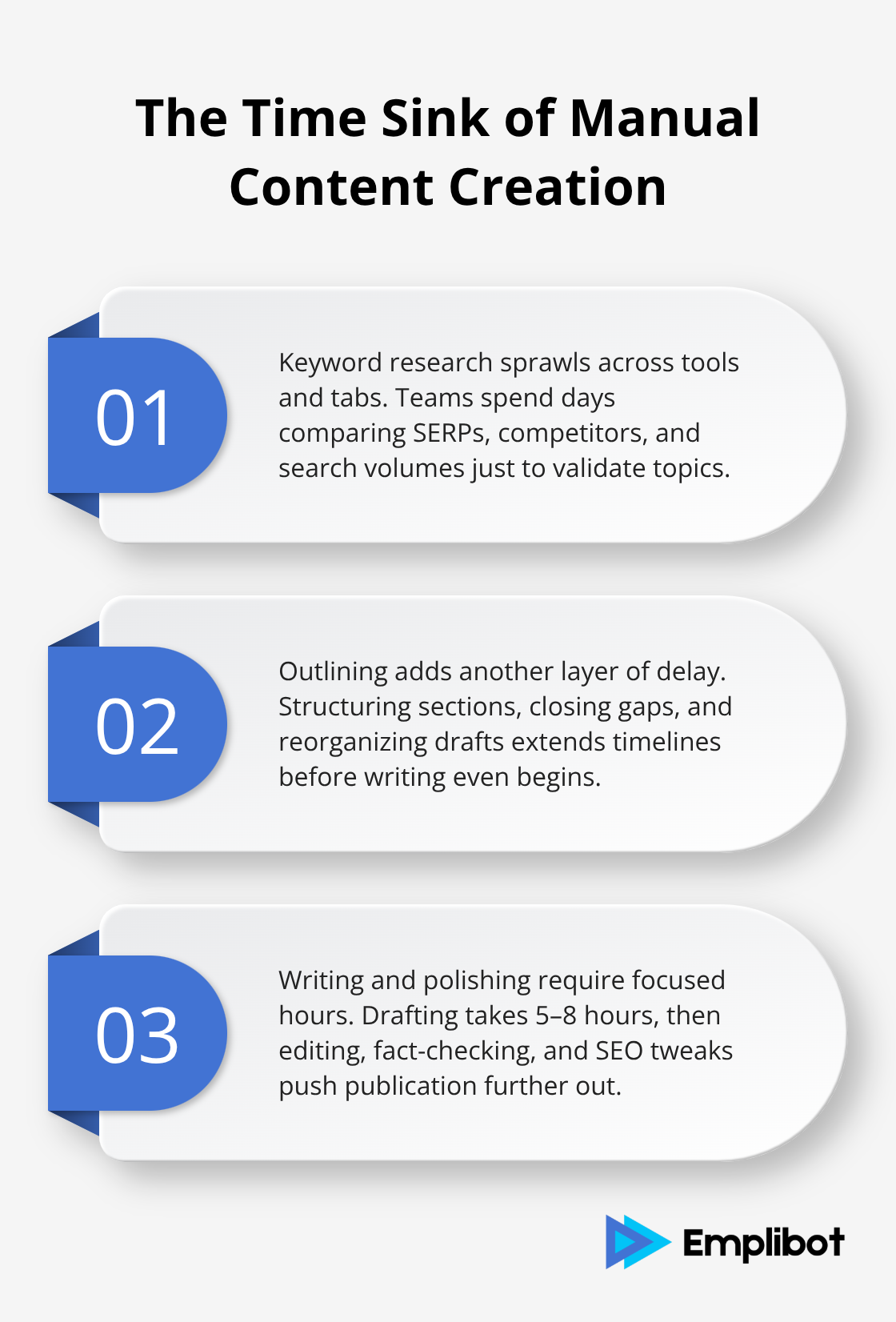
Each step requires human attention and decision-making. When you multiply this across multiple articles per month, your team produces far fewer pieces than the market demands. Faster competitors capture keywords you should own, and your content calendar becomes a source of frustration rather than growth.
Publishing Frequency Determines Your Rankings
Inconsistent publishing schedules tank your SEO performance. Search engines signal boost sites that maintain steady content output. When you publish once a month instead of weekly, you miss four opportunities to target new keywords, capture emerging search trends, and earn internal linking authority. SEO typically takes 4-12 months to work, according to Google research, which means consistent publishing becomes even more critical for long-term success. Your content calendar becomes a wishlist rather than a reality because your team lacks the bandwidth to execute it consistently.
The Cost of Hiring Your Way Out
Hiring more writers solves the frequency problem but multiplies your costs dramatically. A full-time content writer costs $50,000-$80,000 annually in salary alone, plus benefits, software licenses, and management overhead. If you need two or three writers to hit weekly publishing, you’re looking at $150,000+ per year just to keep up. That investment only makes sense if you’re generating revenue that justifies it. For most businesses, that’s not realistic. Automation flips this equation entirely. You can publish weekly or daily without hiring additional staff, which means consistent rankings improvement without proportional cost increases. This is where content automation becomes your competitive advantage.
How Automation Solves SEO at Scale
Automation eliminates the bottlenecks that kill SEO momentum. Keyword research that takes your team days happens in minutes when you use AI-powered tools. Semrush and Ahrefs process tens of thousands of related terms in seconds, identifying terms that actually drive conversions and matching them to the content types your audience searches for. The machine finds patterns across search volume, competition, and user intent that humans would miss or take weeks to spot manually. Once those keywords surface, automation integrates them directly into your content structure, weaving those terms naturally into your content outline, meta descriptions, and headers before a single word of the final article gets written.
On-Page SEO Elements Become Automatic
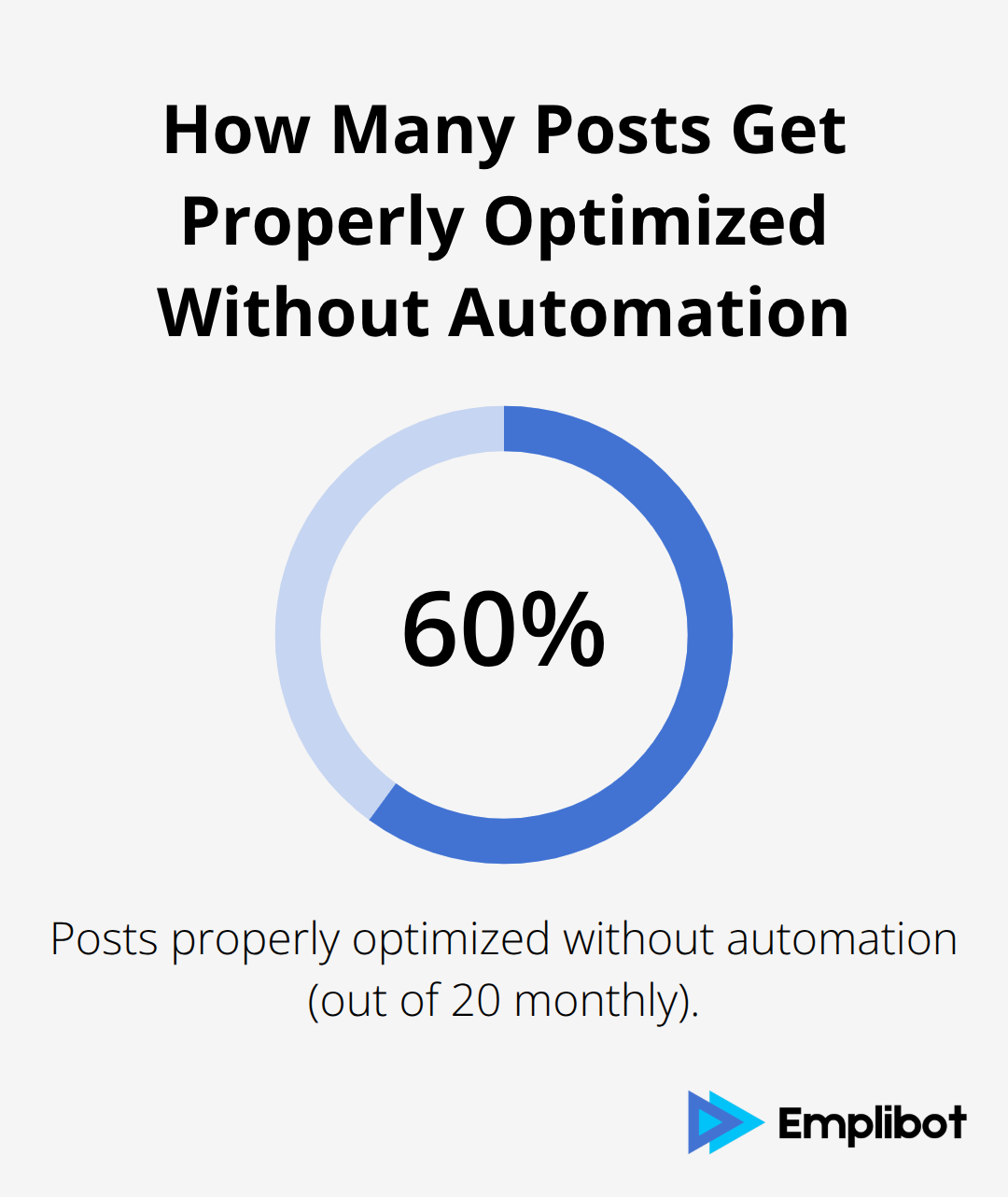
On-page SEO elements that traditionally require manual optimization now happen without human intervention. Your automation platform generates meta descriptions with your target keyword positioned up front, creates URL slugs that include your focus keyword, structures H2 and H3 headings with semantic relevance, and adds alt text to images. This consistency matters because sites with structured, keyword-optimized on-page elements rank faster than those relying on manual implementation. When you publish 20 posts monthly without automation, you might optimize 60% of them properly. With automation, every single post receives the same rigorous treatment.
Publishing Frequency Becomes Predictable
Publishing frequency transforms from a struggle into a reliable system. Automation removes the manual work that creates bottlenecks, allowing your team to publish weekly without hiring additional writers. Sites publishing weekly accumulate more backlinks, capture more long-tail keywords, and build topical authority faster than monthly publishers. The consistency also signals to search engines that your site remains actively maintained and relevant to your audience.
Speed Compounds Into Ranking Advantages
The real advantage emerges when you combine automated keyword research, on-page optimization, and publishing frequency. Your competitors still spend 8 hours per post on content optimization. You publish four posts in the time they finish one. Over a year, that compounds into massive ranking advantages. Tools like Clearscope and MarketMuse save 8+ hours per post by automating content optimization recommendations, while platforms that integrate with Google Search Console provide real-time alerts when your rankings drop or opportunities emerge. You publish smarter content that responds to actual search behavior rather than guesswork.
Cost Per Post Drops While Output Soars
When your automation platform connects to your WordPress blog, it handles publishing automatically, applies SEO formatting consistently, and logs performance data for future optimization. You capture emerging search trends before your competitors even know they exist. The cost per post drops dramatically because automation handles research, optimization, and publishing while your team focuses on strategy and quality assurance. This efficiency gap widens every month-your competitors remain stuck in the manual cycle while you scale content production without proportional cost increases. The question isn’t whether you can afford automation; it’s whether you can afford to keep publishing manually while your competition pulls ahead.
What Results Can You Actually Expect
Traffic Growth Accelerates With Consistent Publishing
Sites that shift from monthly to weekly publishing see ranking improvements within 3-6 months as search engines recognize sustained content output. Traffic compounds over time because each new post targets different keywords, builds internal linking authority, and captures long-tail searches your competitors ignore. A business publishing 4 posts weekly instead of 1 post monthly accumulates 156 additional pieces annually, each generating backlinks and organic search visibility. That volume alone shifts competitive positioning. Sites using content optimization tools see traffic increases within the first three months, though results vary based on your niche competitiveness and existing domain authority.
Lead Generation Improves Through Optimized Content
Lead generation accelerates because optimized content attracts qualified traffic rather than random visitors. When your automation platform ensures every post includes proper keyword placement, meta descriptions, and internal linking, conversion rates improve alongside traffic volume. Your audience finds answers to their specific questions, which means they arrive ready to engage with your business rather than simply browsing. This targeted approach transforms your content from a vanity metric into a revenue driver.
Cost Per Post Drops Dramatically
A full-time content writer costs $50,000-$80,000 annually, yet produces roughly 50 posts per year if you account for research, editing, and revisions. That’s $1,000-$1,600 per post in labor alone. Automation platforms cost $200-$500 monthly, meaning your cost per post drops to $50-$200 depending on your publishing frequency.
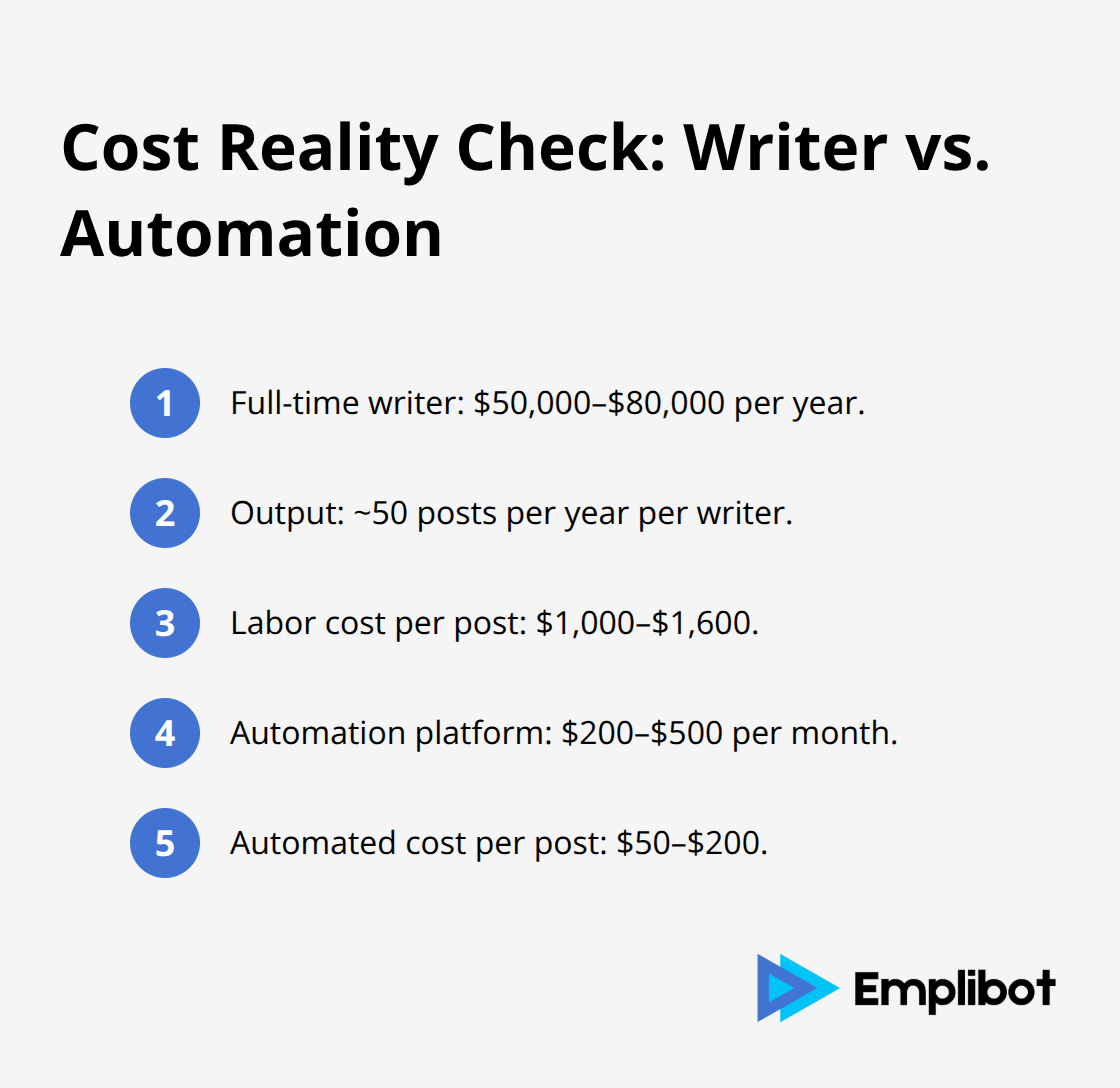
The real advantage emerges at scale: publishing 2 posts weekly instead of monthly multiplies your organic reach without multiplying your team size.
Efficiency Compounds Into Structural Advantage
Your competitors who hire writers to keep pace face budget constraints you’ve eliminated. This efficiency gap compounds annually, giving you a structural cost advantage that grows stronger as you publish more content. Automation handles research, optimization, and publishing while your team focuses on strategy and quality assurance. The question isn’t whether you can afford automation-it’s whether you can afford to keep publishing manually while your competition pulls ahead.
Final Thoughts
Manual content creation traps you in a cycle of slow publishing, high costs, and missed opportunities. SEO-focused content automation breaks that cycle by removing the research, optimization, and publishing bottlenecks that hold most businesses back. Your team no longer wastes weeks on tasks that automation completes in minutes, which means you publish consistently instead of sporadically.
The math is straightforward: hiring writers to scale your output costs $150,000+ annually, while automation platforms cost a fraction of that and handle keyword research, on-page optimization, and publishing without human intervention. Your cost per post drops from $1,000–$1,600 to $50–$200 depending on your publishing frequency. That efficiency gap compounds every month, giving you a structural advantage your competitors cannot match if they remain stuck publishing manually.
Emplibot automates your WordPress blog by handling keyword research, content creation, and SEO optimization across your site. You publish more frequently, rank faster, and generate more leads without hiring additional staff or burning out your team.