

Content teams waste hours on guesswork. They create content based on hunches instead of data, then wonder why engagement tanks.
At Emplibot, we’ve seen firsthand how an AI-driven content strategy changes everything. The brands winning right now aren’t the ones with the biggest budgets-they’re the ones using AI to understand what their audience actually wants, then building narratives around those insights.
How AI Reveals What Your Audience Actually Wants
AI doesn’t guess what topics will resonate. Instead, it analyzes real behavior patterns across your website, social channels, and competitor spaces to surface what audiences genuinely care about. Tools like SEMrush monitor competitor performance and identify content gaps your audience searches for but cannot find elsewhere.
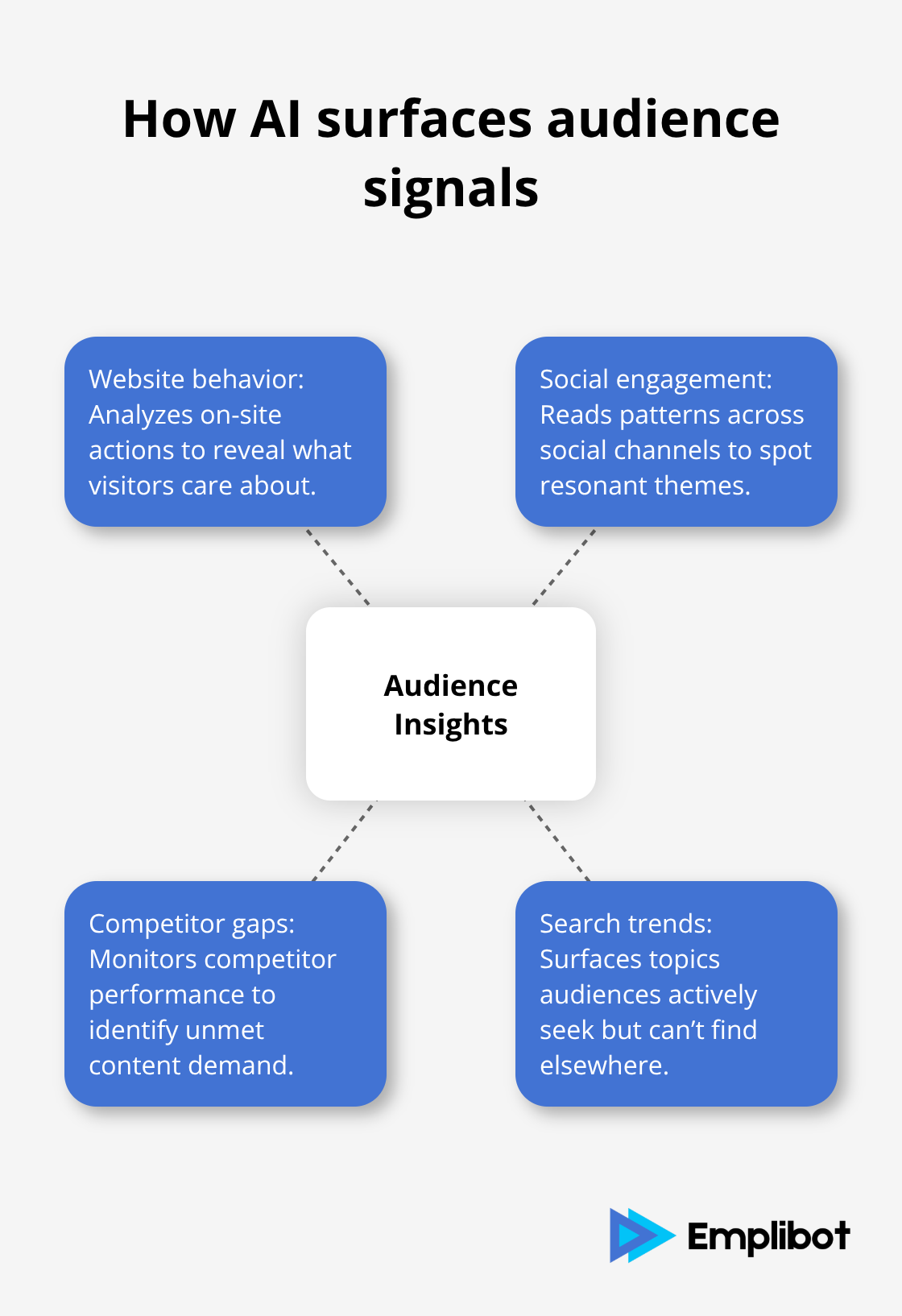
When you feed this data into your content planning, you stop creating based on assumptions and start creating based on evidence.
According to Jasper’s State of AI in Marketing 2025, AI-powered market research accelerates insights by analyzing search trends, purchase patterns, and social engagement to reveal what audiences actually want. This means you can target high-value keywords and tailor campaigns to specific pain points instead of hoping your content lands. The shift from hunches to data-backed decisions cuts research time dramatically, freeing your team to focus on narrative and strategy rather than manual spreadsheet analysis.
Predictive Models Point You Toward Tomorrow’s Topics
Forecasting models crunch historical performance data and real-time trends to guide what topics or formats will perform next month. Instead of waiting six months to discover a topic flopped, AI flags rising interest patterns early so you can capitalize before competitors do. This predictive layer transforms content planning from reactive to proactive.
Research from McKinsey 2025 shows that predictive content planning models help companies unlock AI’s potential at work. Tools like HubSpot’s Content Strategy use machine learning to suggest quality topic clusters and automatically perform competitive research to validate ideas before your team invests time writing. Try starting with one meaningful datapoint per audience segment rather than overwhelming yourself with a dashboard full of numbers-pick the single insight that shifts your narrative, then build content around it.
Automation Eliminates the Busywork
Repetitive tasks like keyword research, metadata generation, and content outlines consume hours that could go to creative strategy. AI handles these mechanical steps in minutes, not days. This isn’t about replacing writers; it’s about removing friction so writers can focus on voice, nuance, and storytelling.
Tools like MarketMuse help plan content by identifying targeted terms and topics to own, delivering AI-powered SEO recommendations automatically. Acrolinx enforces brand standards across large teams, ensuring tone and style stay consistent at scale without manual review of every piece. When automation handles the foundation work, your team moves faster from brief to published content, and you publish more frequently without burning out your people. The real opportunity emerges when you shift your team’s energy toward the next phase: building narratives that actually connect with your audience.
How to Turn Audience Data Into Content People Actually Read
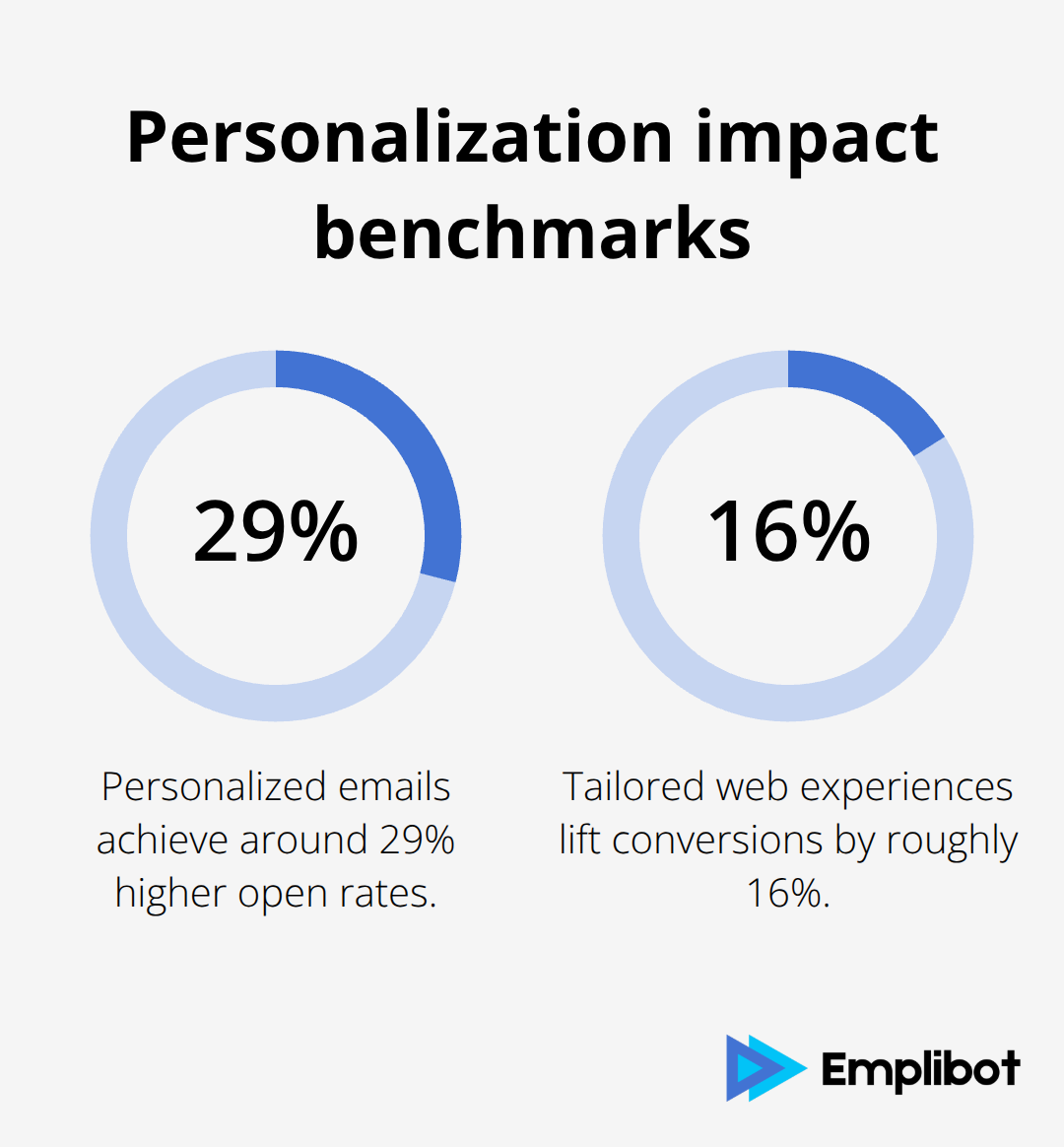
Personalization without data amounts to guessing with better intentions. The moment you feed real audience behavior into your content strategy, everything shifts. Personalized emails achieve around 29% higher open rates, and tailored web experiences lift conversions by roughly 16%, according to industry benchmarks. These aren’t theoretical numbers-teams see these results when they stop treating all readers the same.
AI analyzes real-time behavior patterns: which pages visitors land on, how long they stay, what they click next, their location, purchase history. It then assembles or tweaks content elements so first-time visitors encounter explainers while returning customers see relevant offers. The key lies in feeding this behavioral data directly into your content creation process. Tools like HubSpot’s Content Strategy use machine learning to segment audiences with demographic, behavioral, and psychographic data, then guide your narrative angles toward what actually resonates with each group.
Start With One Insight Per Segment
Overwhelming yourself with dashboards full of numbers kills momentum. Instead, identify the single datapoint that shifts how you talk to each audience segment, then build content around it. This focused approach prevents analysis paralysis and keeps your team moving toward actual content production. When you anchor your narrative to one meaningful insight, you create stronger, more targeted messaging than when you try to incorporate everything at once.
Ground Your Narratives in Real Insights, Not Hunches
Data-driven storytelling blends research, audience insights, and creativity to craft authentic campaigns that cut through generic AI-generated noise. The difference between forgettable content and content that converts comes down to whether you’ve grounded your story in what your audience actually cares about. Use frameworks like Jobs-to-Be-Done to identify why people hire your product, when they use it, and what need it fulfills. Then translate those insights into specific narrative angles. If your data shows customers mention pain point X repeatedly across reviews and social conversations, that becomes your story angle-not some theoretical benefit you assume matters. Reputable sources like Statista and Eurostat provide audience research that answers who your customers are, what worries them, and what they love. When you combine that external data with your own user behavior analysis, you have permission to tell bold stories backed by evidence. Verify your channel and messenger choices with data too: align content with platform behavior, influencer audiences, and community habits. Content grounded in real data becomes less replicable by AI and more valuable to your audience.
Adapt Your Core Narrative Across Channels
Content that performs on LinkedIn tanks on TikTok. Rather than creating separate narratives for each channel, use AI to adapt a core narrative to channel-specific formats and timing. Dynamic optimization means testing headlines, images, and CTAs across platforms, then letting performance data guide what stays and what changes. Tools like Acrolinx enforce brand standards across large teams, ensuring your tone and style remain consistent while still adapting to platform norms. Orchestration platforms tailor asset formats, hashtags, and post times to when your audiences are most active, then adjust timing if engagement shifts. The practical workflow: create one data-informed core narrative, then use AI to generate channel-specific versions, monitor performance dashboards for CTR and dwell time, and refine based on what your data shows is actually working. This foundation positions you to measure which narratives truly move the needle.
Building Your AI Content System
The gap between understanding AI’s potential and actually implementing it stops most teams cold. You know personalization and data-driven narratives work, but selecting tools from a crowded marketplace, wiring them into existing workflows, and measuring what actually matters feels overwhelming. The solution isn’t picking the fanciest platform-it’s starting with a single, specific problem your team faces right now and solving it with the right tool.
Identify Your Biggest Workflow Bottleneck
If keyword research eats up 10 hours weekly, tools like MarketMuse or SEMrush solve that directly. If brand consistency across multiple writers is your pain point, Acrolinx enforces voice and tone automatically across documents before publishing. If you struggle to turn blog content into social posts fast enough, repurposing workflows with Jasper or Writesonic cut that friction dramatically. The real mistake teams make is buying comprehensive platforms and trying to use every feature at once. Instead, audit your workflow honestly: where do people waste time? Where do mistakes slip through? Where does quality drop because you’re moving too fast? Pick one friction point and automate it first. Once that integration runs smoothly for two weeks, add the next layer. This phased approach means you understand each tool deeply, your team adopts it without resistance, and you measure real ROI before scaling further.
Wire Tools Into Your Existing Workflow
Integration into your existing workflow matters more than the tool itself. If you use WordPress, solutions that automate content creation and distribution directly to your blog and social channels eliminate manual handoffs entirely. Your writers focus on strategy and narrative while the system handles formatting, scheduling, and publishing. Set clear guardrails before launching: define which brand voice rules the AI must follow, which topics are off-limits, which channels get which content formats. Tools like Acrolinx embed these rules directly into the creation process so violations get caught before publishing, not after.
Measure Performance From Day One
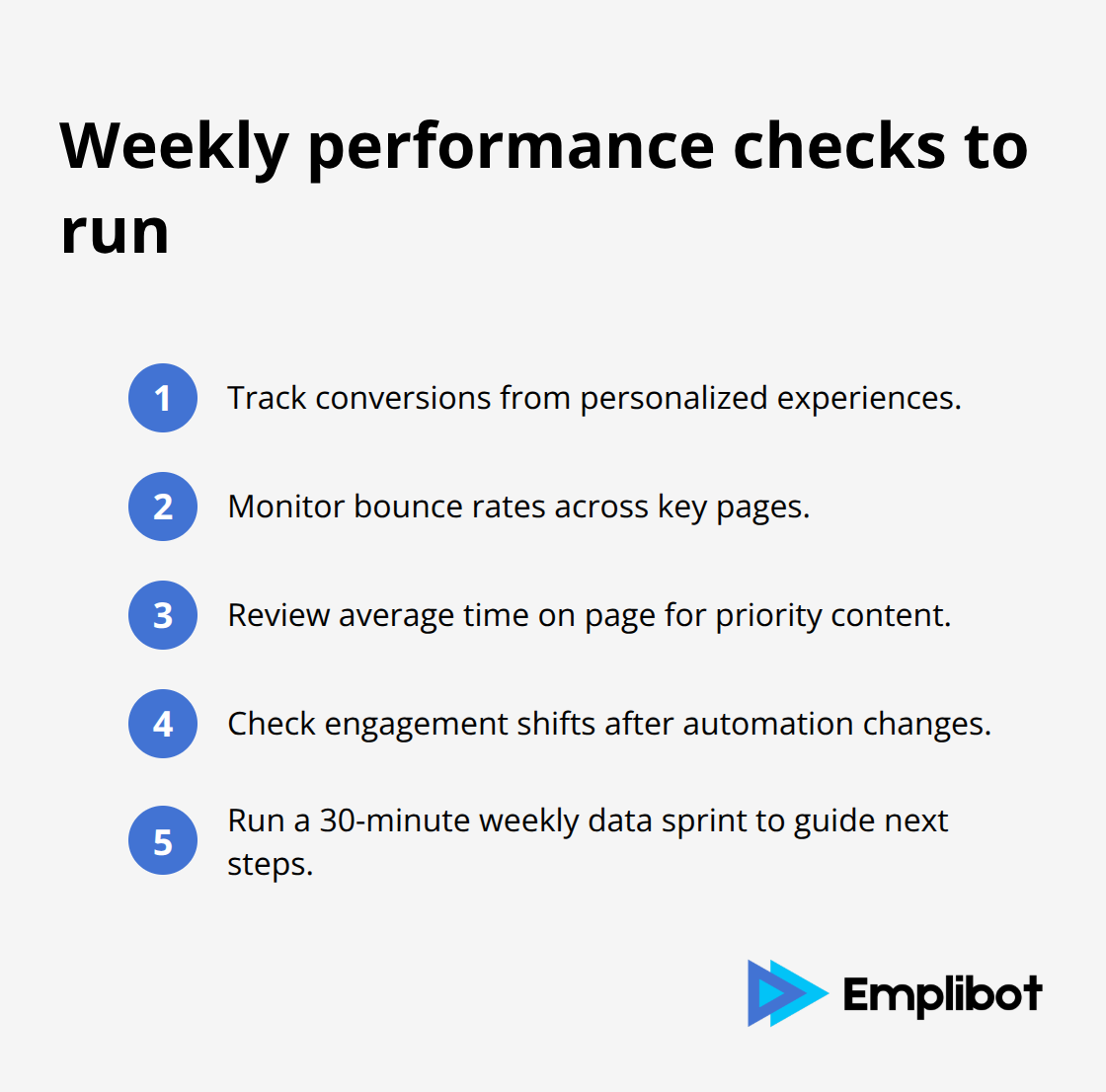
Track conversions, bounce rates, time on page, and engagement shifts from personalization and automation. A 30-minute data sprint each week-looking at what content drove clicks, what topics gained traction, which channels outperformed-guides your next iteration. Your team should see tangible time savings within the first month.
If they don’t, something in your integration isn’t working. Adjust the tool configuration, the guardrails, or the workflow itself until efficiency actually improves.
Scale Only After Validation
The brands that win with AI-driven content aren’t the ones with perfect setups-they’re the ones that start small, measure obsessively, and refine continuously. Once your first automation delivers measurable results (faster output, lower error rates, higher engagement), you have permission to expand. Add a second tool to handle the next bottleneck. Integrate it the same way: set guardrails, measure performance, refine based on data. This iterative approach prevents costly mistakes and keeps your team aligned throughout the transformation.
Final Thoughts
Teams using an AI-driven content strategy report measurable improvements in engagement, conversion rates, and publishing speed within weeks, not months. Personalized content lifts conversions by roughly 16%, and brands with consistent messaging across channels see revenue increases around 10% or higher. These results come from teams that stopped guessing and started building narratives grounded in real audience behavior.
Your competitors are already analyzing audience data, automating research, and personalizing at scale-waiting another quarter means falling further behind. The teams winning right now aren’t the ones with the biggest budgets or the most writers; they’re the ones using AI to understand what their audience actually wants. Starting your transformation doesn’t require overhauling everything at once-pick one workflow bottleneck (keyword research, content repurposing, brand consistency, or publishing speed) and solve it with the right tool.
Emplibot automates your WordPress blog and social media by handling everything from keyword research to content creation and SEO optimization, then distributes your content across LinkedIn, Facebook, and Twitter automatically. You get high-quality, engaging content tailored to your business without the manual overhead, so your team publishes more frequently, reaches larger audiences, and drives measurable results without burning out.