

WordPress content automation eliminates the grind of manual publishing. Instead of spending hours on repetitive tasks, you can focus on strategy while your tools handle the work.
At Emplibot, we’ve seen businesses publish 3x more content with the same team size. The result: more traffic, more leads, and better search rankings without burning out your staff.
How WordPress Automation Cuts Your Workload
WordPress automation removes tedious manual scheduling; so your team can focus on what actually moves the needle. Manual scheduling, formatting, and cross-posting to social platforms consume hours every week. Automation eliminates that entirely. Tools that handle keyword research, content creation, SEO optimization, and multi-platform distribution mean your team spends less time on repetitive admin work and more time on strategy, audience research, and creative direction.
Stop Wasting Time on Routine Tasks
The traditional approach to scaling content output involves hiring more writers and social media managers. That’s expensive and often unnecessary. WordPress automation lets you publish significantly more content with your existing team. A small marketing department can now manage the output of a much larger one through automated scheduling, formatting, and distribution. Instead of hiring a dedicated person to post across social channels, that responsibility becomes a background process.
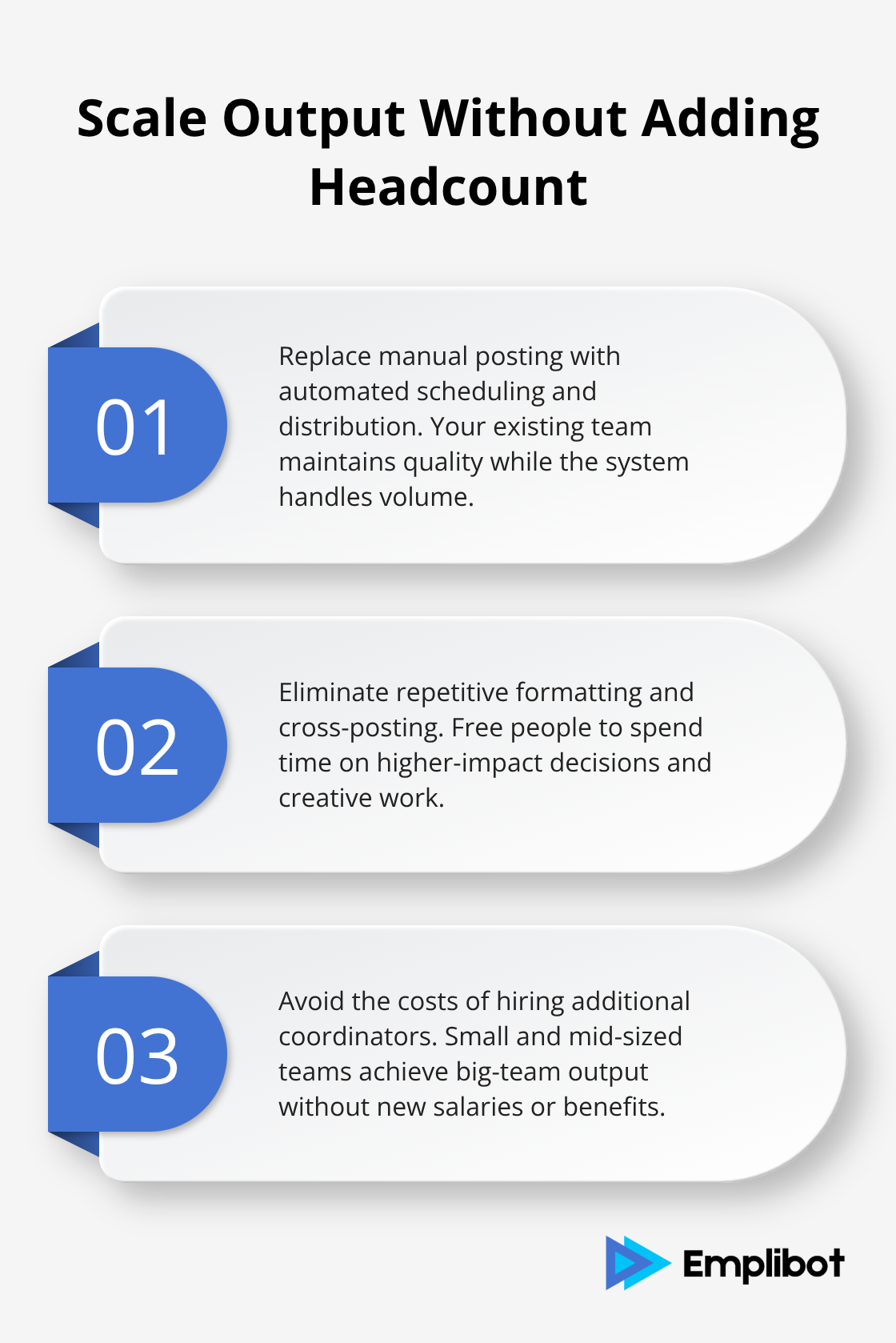
Your current team maintains quality while the platform handles volume.
This matters most for small and mid-sized businesses where budget constraints make hiring difficult. You get the output of a larger team without the salary and benefits costs.
Redirect Your Team Toward Strategy
When your team stops posting content manually or scheduling updates, they can actually think about content strategy. What topics resonate with your audience? Which formats drive conversions? How should your messaging evolve? These questions require human judgment and creativity, not manual task execution. Automation frees your team to conduct proper audience analysis, test different content approaches, and refine your overall marketing direction.
Your writers can focus on researching deeper topics and creating higher-quality content through automation instead of worrying about publication logistics. The result is better content, faster iteration, and measurable improvements in traffic and lead generation. This shift from execution to strategy separates companies that merely publish content from those that build real competitive advantage through it.
What Tools Actually Automate Your WordPress Workflow
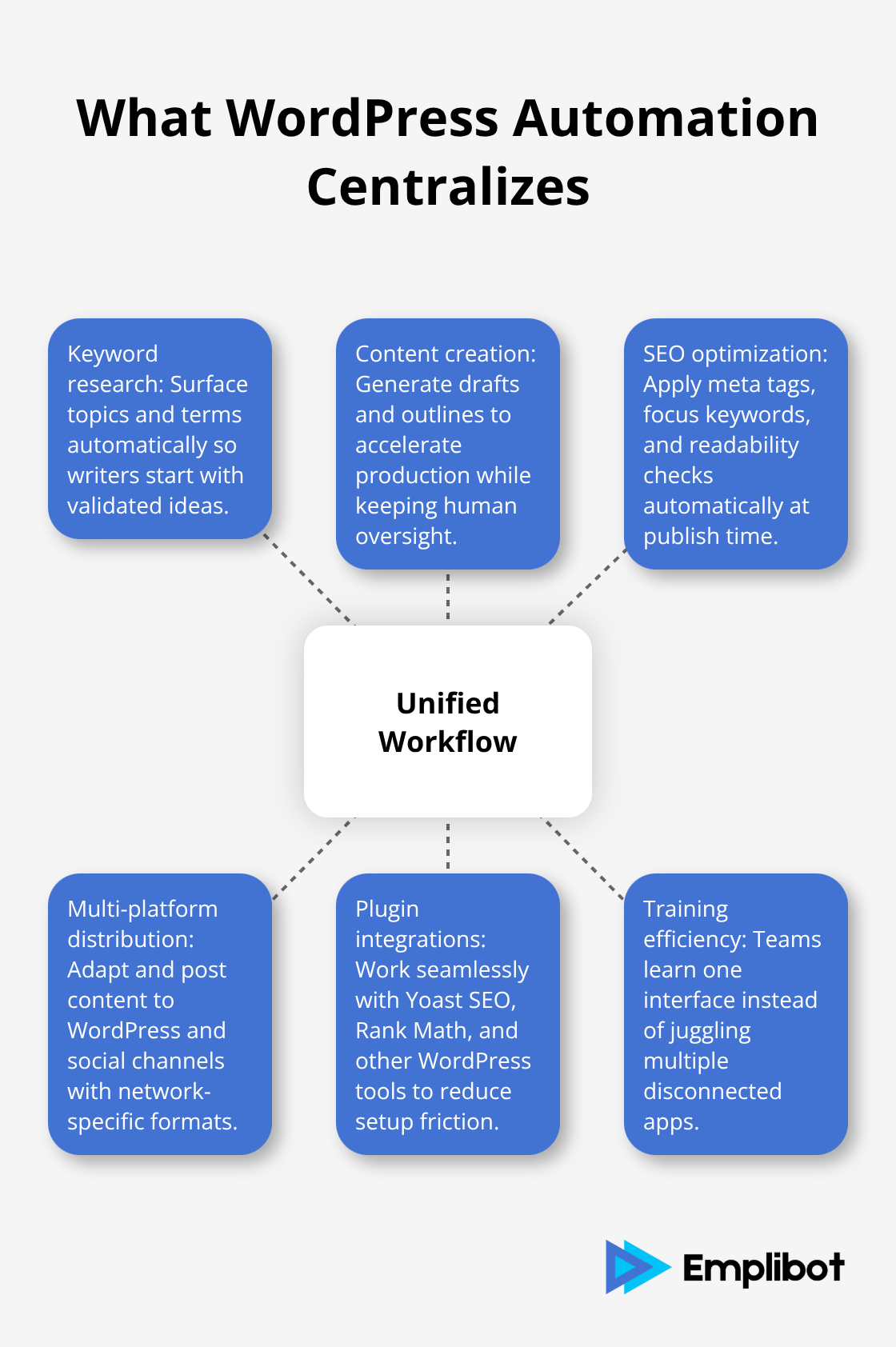
Modern WordPress automation handles far more than simple scheduling. The best platforms tackle keyword research, content creation, SEO optimization, and multi-platform distribution within one system. This matters because fragmented tools create friction-you end up managing separate platforms for each stage of your workflow. Real automation consolidates this work into a single pipeline where data flows seamlessly from research through publishing.
Consolidate Your Tools Into One Workflow
Instead of researching keywords in one tool, writing in another, optimizing for SEO in a third, and scheduling across social platforms in a fourth, unified systems handle everything in sequence. This approach reduces errors, saves setup time, and eliminates manual data transfer between tools. Your team spends time on judgment calls (which topics matter most, how to position your brand) rather than on mechanical tasks. When you consolidate your workflow, you also reduce the training burden-your team learns one platform instead of juggling four or five different interfaces.
Automate SEO Optimization Across Your Content
Platforms that handle SEO optimization automatically pull data from your existing SEO plugins like Yoast SEO or Rank Math, generate appropriate meta tags, and ensure your content reaches search engines properly formatted. This integration means your content meets technical SEO requirements without manual intervention. Your team no longer needs to manually write meta descriptions, set focus keywords, or check readability scores-the system handles these tasks as part of the publishing process. When SEO optimization happens automatically, your content ranks better from the moment it publishes.
Distribute Content Across Platforms With Consistency
Multi-platform distribution means a single piece of content gets adapted and published across your WordPress site and social networks simultaneously, with platform-specific formatting handled automatically. This consistency across channels drives the traffic and lead generation improvements that matter to your business. Your blog post reaches LinkedIn with professional formatting, Facebook with shareable dimensions, and Twitter with appropriate length constraints-all without manual adjustment. When distribution happens automatically, you maintain a steady presence across channels without requiring someone to manually post each update.
Choose Tools That Actually Work Together
The practical advantage appears immediately in how your team operates. Platforms that integrate deeply with WordPress (rather than requiring manual API connections) reduce setup friction and ongoing maintenance. Tools that connect with your existing plugins and services mean less configuration work and fewer compatibility issues. Your team can start automating within hours rather than spending days on technical setup. When your automation tools work seamlessly with your existing WordPress ecosystem, you unlock the efficiency gains that make content automation worthwhile.
How Automation Drives Real Business Results
Consistent publishing creates compound growth that inconsistent publishing cannot match. Businesses that publish regularly see 67% more leads than those publishing sporadically. Automation guarantees that consistency by removing the friction that derails publishing schedules.
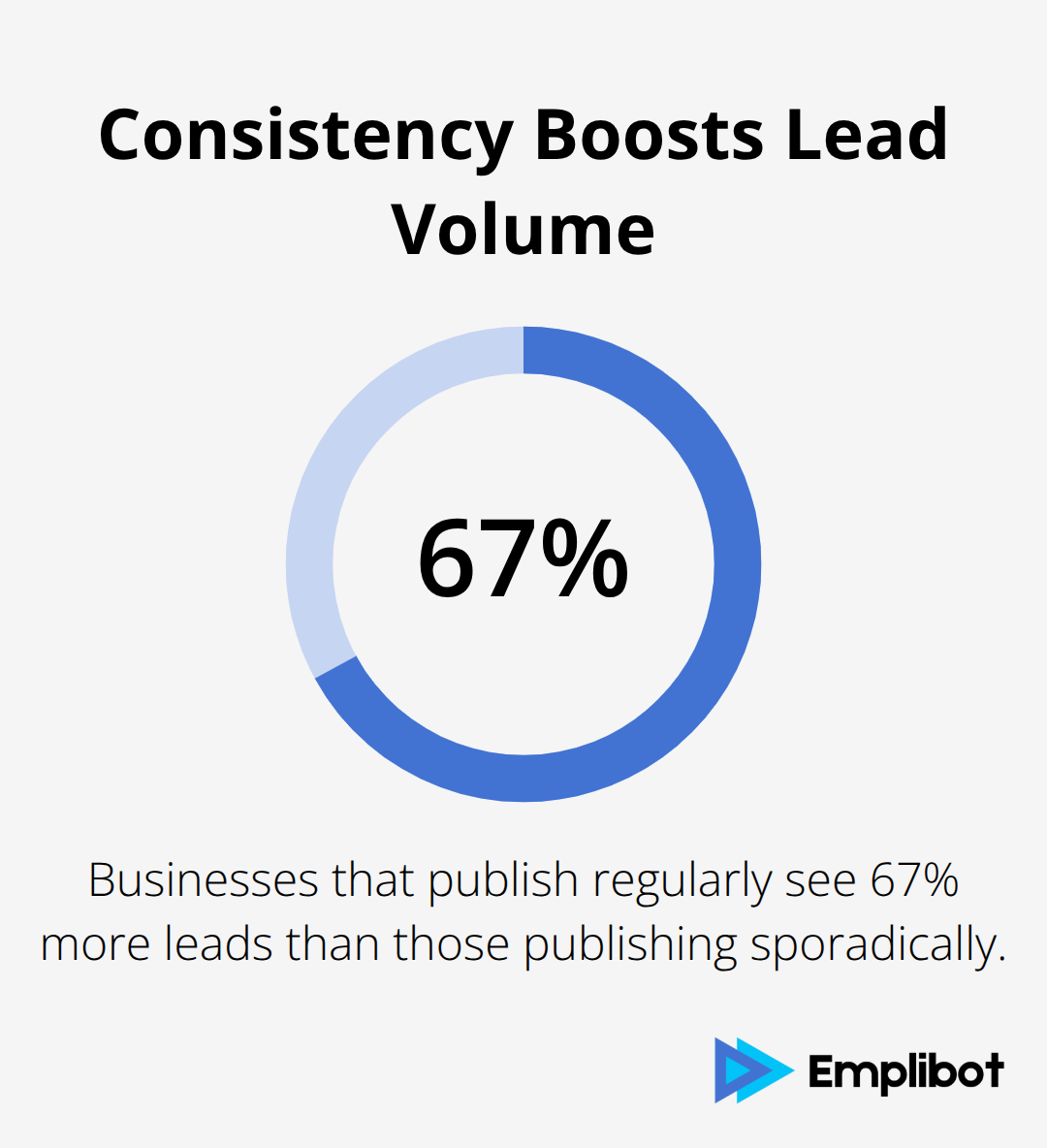
When your content goes live on a predetermined schedule without requiring manual intervention, you maintain momentum regardless of how busy your team gets. The traffic impact appears within weeks, not months. Sites publishing multiple times per week attract 5x more traffic than those publishing less frequently, and automation makes that frequency sustainable without hiring additional staff. Your WordPress site becomes a lead generation machine because content flows continuously rather than in sporadic bursts. This regularity signals to search engines that your site is active and worth crawling frequently, which directly improves your rankings for competitive keywords.
Search Rankings Improve When Content Meets Technical Standards
Automation that handles SEO optimization ensures every piece of content meets search engine requirements before publishing. Tools that integrate with Yoast SEO or Rank Math automatically generate proper meta descriptions, set focus keywords, and verify readability scores as part of the publishing workflow. This means your content ranks better from day one because it’s technically optimized when it goes live, not weeks later after manual review. Pages with properly optimized meta descriptions receive 5.8% more clicks from search results. When automation handles this optimization consistently across hundreds of posts, the cumulative ranking improvement becomes substantial. You publish not just more content, but better-optimized content at scale. Search engines reward this consistency with higher rankings, which drives organic traffic that costs nothing to acquire. The lead quality from search traffic also exceeds social traffic because these visitors actively searched for solutions your content addresses.
Lead Generation Multiplies Through Multi-Platform Presence
A single blog post reaches exponentially more people when it automatically distributes to LinkedIn, Facebook, Twitter, and your WordPress site simultaneously. Different audiences congregate on different platforms, so reaching them where they already spend time generates more qualified leads. LinkedIn audiences engage with professional content differently than Facebook audiences, and automation handles these platform-specific adaptations automatically. Your blog post reaches LinkedIn with professional formatting optimized for that network’s algorithm, while the same content gets formatted for Facebook’s audience and Twitter’s character constraints, all without manual adjustment. This multi-platform presence means a single piece of quality content generates leads across channels instead of just on your WordPress site. Automation makes maintaining that multi-platform presence feasible for small teams that would otherwise lack the bandwidth to post consistently across channels. Each new piece of content becomes a lead generation asset across your entire digital presence, multiplying the return on your content investment.
Conclusion
WordPress content automation transforms how businesses approach content marketing by consolidating keyword research, writing, optimization, and distribution into a single workflow that runs consistently without manual intervention. Your content reaches search engines properly optimized, your audience encounters your brand across multiple platforms simultaneously, and your team reclaims hours each week previously lost to scheduling and formatting. This efficiency compounds over time as a business publishing three times weekly instead of once weekly generates significantly more organic traffic, captures more qualified leads, and builds stronger search visibility without proportional increases in headcount or budget.
The competitive advantage belongs to companies that automate effectively. While competitors manually post content sporadically, your automated system publishes consistently across WordPress and social platforms. While they struggle to maintain technical SEO standards across dozens of posts, your automation ensures every piece meets search engine requirements before publishing. While they hire additional staff to scale output, you scale with your existing team through WordPress content automation tools that integrate seamlessly with your existing ecosystem.
Starting your automation journey requires selecting tools that handle keyword research, content creation, SEO optimization, and multi-platform distribution within one system. Emplibot automates your WordPress blog and social media by managing everything from keyword research to content creation and SEO optimization, then distributes your content across platforms like LinkedIn, Facebook, and Twitter. The time to start is now-every week you delay is content your audience never sees and leads you never capture.